Wednesday, July 22, 2009

Mt. Huang Shan


Thousands of feet high towers the Yellow Mountains
With its thirty-two magnificent peaks,
Blooming like golden lotus flowers
Amidst red crags and rock columns.
Once I was on its lofty summit,
Admiring Tianmu Pine below.
The place is still traceable where the immortal
Before ascending to heaven made elixir out of jade.
Now you embark on your journey there alone---
Another Wen Boxue I happened to meet---
Who've been to Five Mountains for beauty of nature,
Leaving behind countless ranges of hills.
Homeward you go back to White Goose Ridge,
Back to drink from your Elixir Well.
If by chance I pay you a visit,
I expect to be met by your light carriage.
Eastwards from Lingyang you bend your steps,
And pick your way through fragrant bushes,
Many a stream and many a ford,
Peaks upon peaks shutting out the sky
That's where I'll call on you some other day
Across a bridge that spans cliffs like a rainbow.
--Li Bai

The above poem was made by an outstanding Chinese poet, Li Bai, titled with "Seeing off Hermit Wen Back to Former Residence White Goose Peak in the Yellow Mountains" . Truly, Mt.Huangshan is a magical mountain it's like a perfect unfolded Chinese landscape painting. Wherever you are at this charming mountain, you always have something to enjoy and take photos. A Chinese saying goes: Having seen the five holy mountains, no need to visit any other mountain. However, No need to see the five holy mountains if you have seen Mt. Huang Shan.

Taking cable-car to YunGu Temple, from where we started climbing.
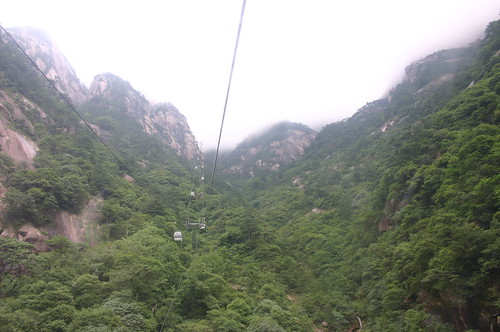
IMG_2791

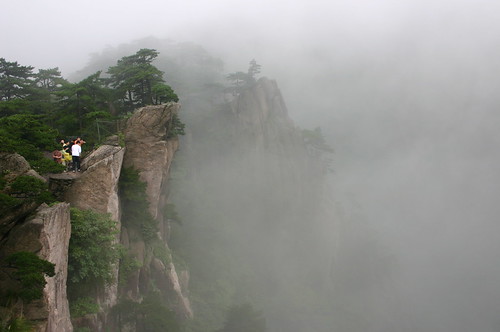
Most stone stairs built along the cliff
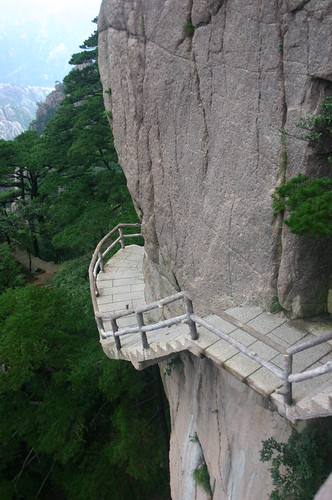
The road we were taking

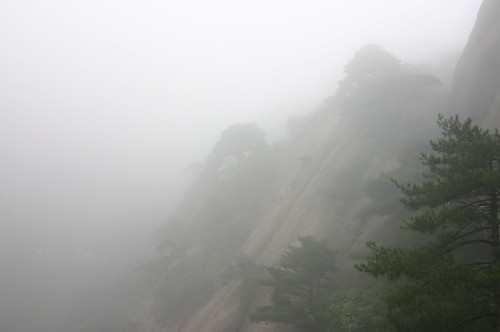
Amist the Fog

IMG_2792

Huangshan Pine. Those pines typically grow at high altitudes on steep, rocky crags, and are an integraltion component of the exceptional landscape. The fantastic pines, the grotesque rocks, the sea of clouds, and the hot springs are the four major attractions of HuangShan.
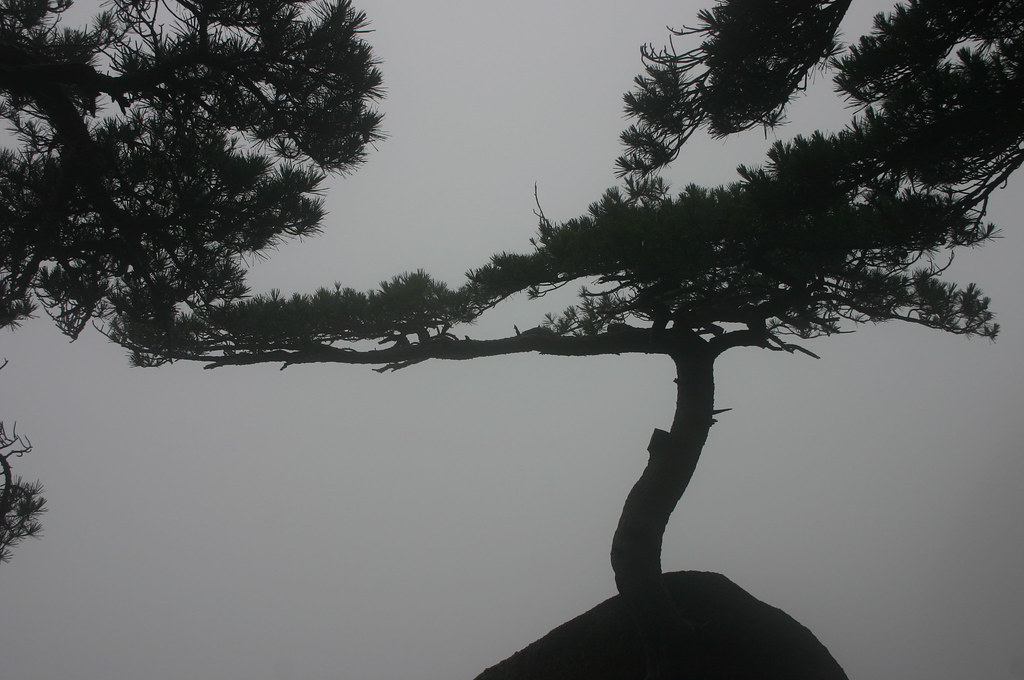
HuangShan Pine

Calligraphy on the rock. Literally, "Created by the Heaven"
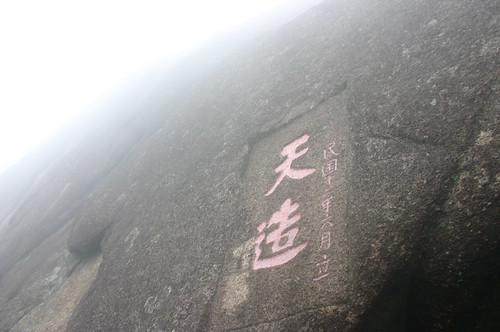
IMG_2813

Wild flower on the mountain, showing her beauty silently.
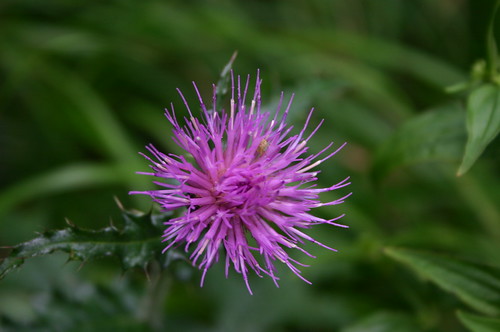
Wild Flower

Lock of Love. People,especially lovers, incribed their names on locks, with the hope that the magic mountain can witness and strengthen their love.
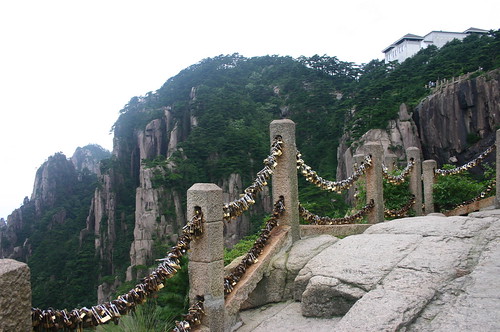
IMG_2844

The cliff

IMG_2840

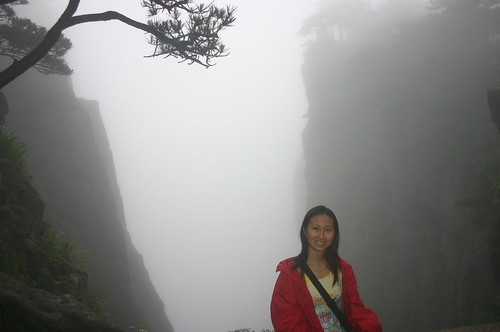
Me

With mom and dad


For years, mom and dad went through wind and rain in their life. No matter what happens, they are always together. This picture reminded me of the old Chinese saying from the Book of Odes (论语, written as early as 1000BC) 执子之手,与子偕老

"I hold your hands;
We are to grow old together."
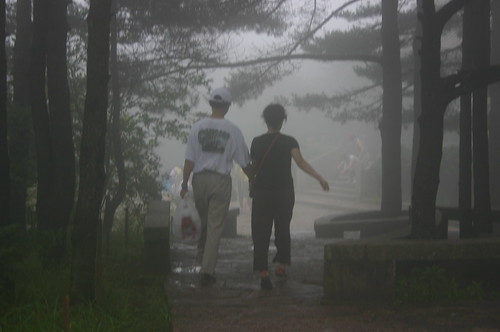
Mom and Dad -1


Photographed by Jennie Bai.

Copyright ©Jennie Bai. All Rights Reserved.

(This article was initially written in the summer of 2006.)

Hui Zhou - the Cradle of Hui Culture


The Hui Culture began to thrive in the later part of the Northern Song Dynasty (960 to 1120 A.D.), and was at the height of splendor in the Ming and Qing dynasties.It has outshone other local cultures in the country over 800 years because of its rich and special features. The Hui Culture is rich in meaning and exhibits unique styles and genres. It covers almost all the learning, ranging from philosophy, culture, medicine, architecture and so on.

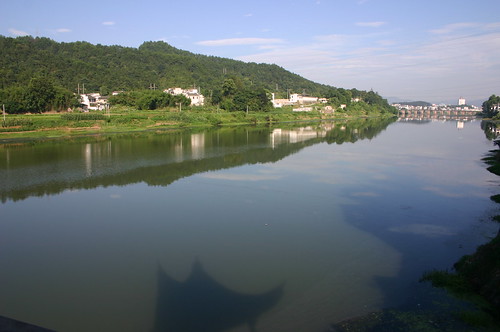
The Mother-river of HuiZhou

IMG_2908

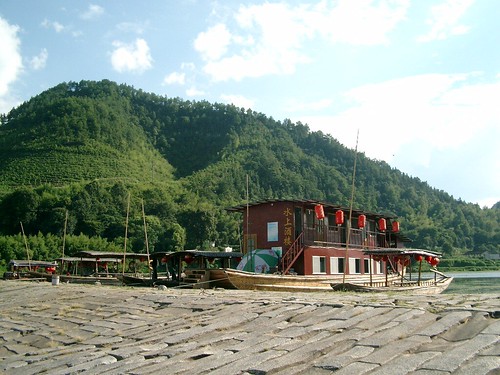
Yu Liang Old Dam. The boat in the picture is now converted to a floating restaurant.

Yu Liang Dam

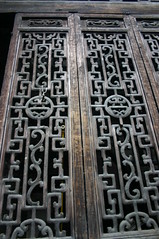
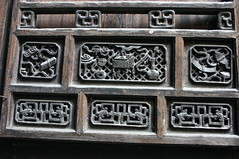
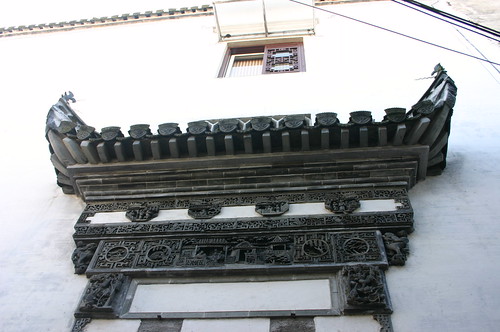
Famous Huizhou Four Carvings: brick carvings, stone carvings, wood carvings and bamboo carvings,all using Hui style folk carving techniques.They came into being in the Song Dynasty (960 to 1120 A.D.), and flowered in the Mingand Qing dynasties and are mainly used in the decoration of buildings,archways, and also in making furniture, brush pots, and new-year couplets enchased on screens.

Brick Carving

The Wall

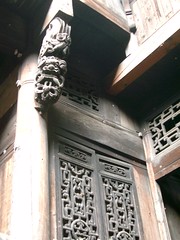
Wood Carving

Wood Carving-2 Wood Carving IMG_2971

IMG_2994

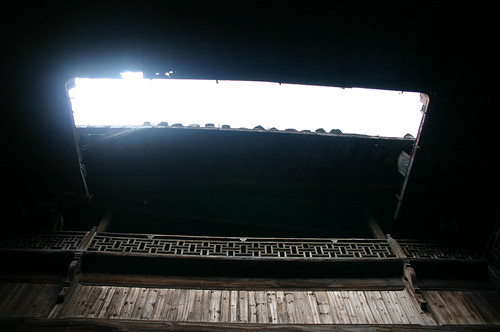
Skylight. Hui style houses are typically ones with skylights. With a quadrate skylight surrounded by houses from four sides or from left,right and backside, these Hui style houses can reduce the beat of sunshine and enjoy ventilation. All the houses drain off water to the skylight which means fortune will not run off outside, which is called "four sides water returning to the main hall of the houses" by local natives.

IMG_2972

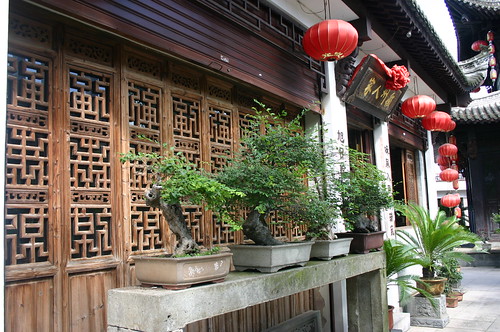
Pen Jing, Chinese landscape bonsai. Penjing is the Chinese art of creating a miniature landscape in a container. The word consists of the two characters shown on the left: "pen" - "pot" or "container", and "jing" - "scenery". An artist may use plant material and natural stone to portray an idylllic mountain retreat with a murmuring brook or a waterscape with a lush tropical island. Or he or she may design a much simpler scene where one single tree makes up the entire composition.

Mini Plants

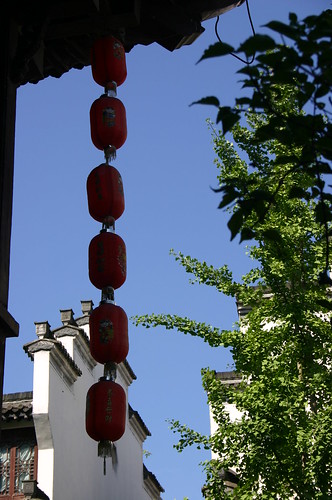
Lantern from the ceiling of a typical Hui-style dwelling, which is shown in the background.

Lantern from the Ceiling

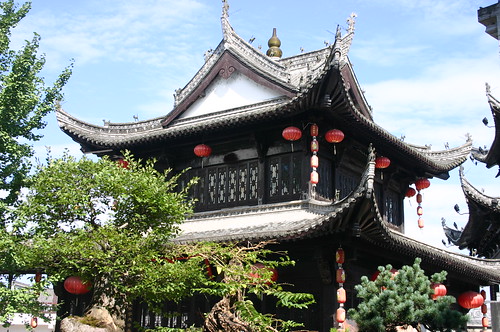
Hui-style building

Hui Guarden

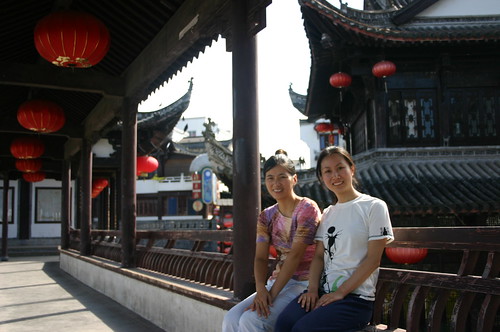
Xiao Zheng (Z) and I. Z was my guide in Huizhou, a plain and sincere woman. She guided us through ancient Hui Zhou town, and even invited us to her home. Her mother with her niece live in a promote village. There most old buildings are reserved and people are so hospital. There is no paved way to that village. It took us quite a while arriving there. But it was worthwhile for all the experience

IMG_2957

Z's niece, Yan zi (swallow).

IMG_2988

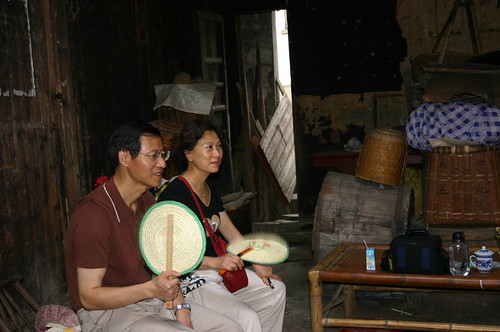
At Z's mother's house.

IMG_2991

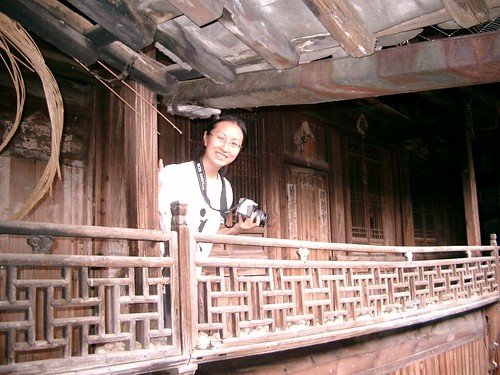
Taking pictures from the second floor, at Z's mother's old house.

Me

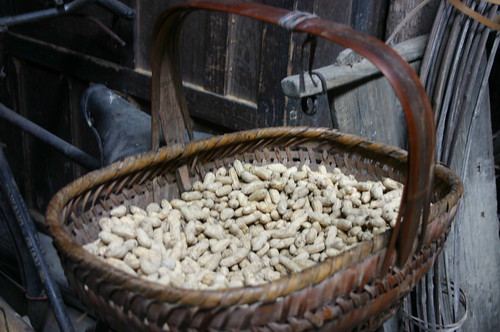
Fresh Peanut, just off the vine. Z's mother offered us boiled salty peanut with warmth and generosity. Once we entered her door, she then went to the kitchen. You cannot imagine the troubleness. She need to make fire with branches, chopped from trees and carried down from the hill. I am so touched by her kindness.

Peanut, just from vine

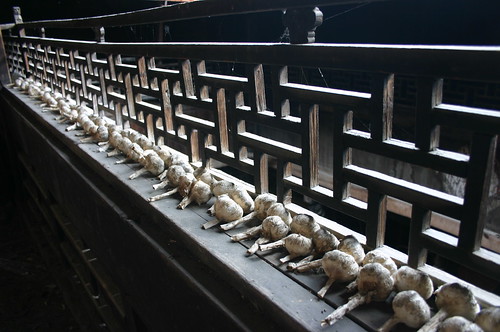
Garlic reserved for the winnter.

IMG_2978

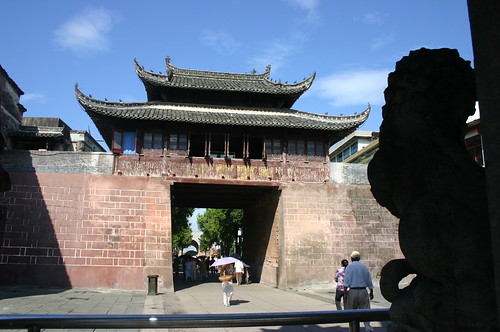
The ancient wall of HuiZhou

IMG_2943


Photographed by Jennie Bai.

Copyright ©Jennie Bai. All Rights Reserved.

(This article was initially written in the summer of 2006.)

Monday, July 20, 2009

Florida Palette


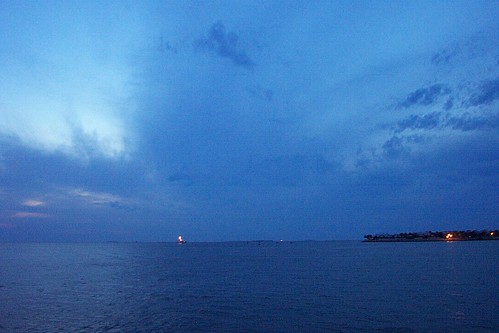
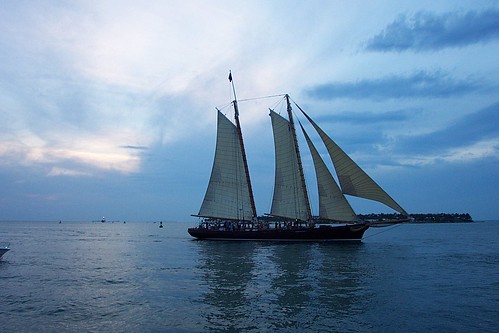
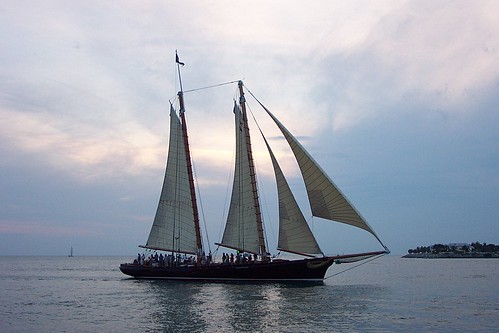
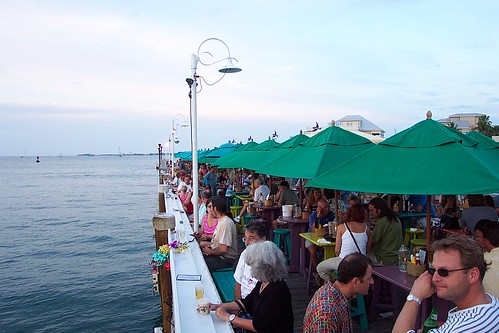
Key West, the most benautiful pearl in the Florida Keys. Here, I fell in love with BLUE at the first sight. From then on, BLUE becomes my life's color. The sea and the sky generously show me the diversified layers of what blue could be. At that time, I thought the blue series is enough to express my sensation. -- Till another trip two years later in Algonquin Park, Canada, I found life's color could be more than blue...

DCP_8607

DCP_8558

DCP_8568

DCP_8566

DCP_8564

Romantic Green.

DCP_8533

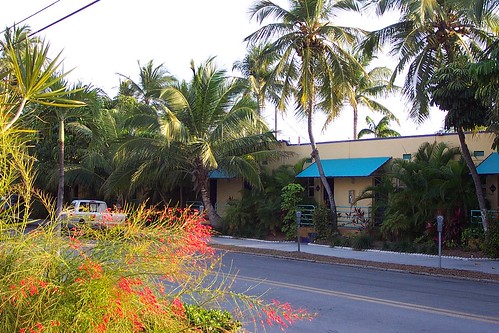
Windows, Inside and Outside.

DCP_8519

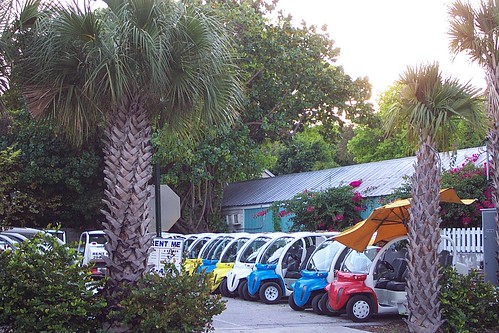
Rent Me! -- These cute cars are for tourists.

DCP_8507

DCP_8500

Big and Small. Taken in the South Steet, Miami.

DCP_8425

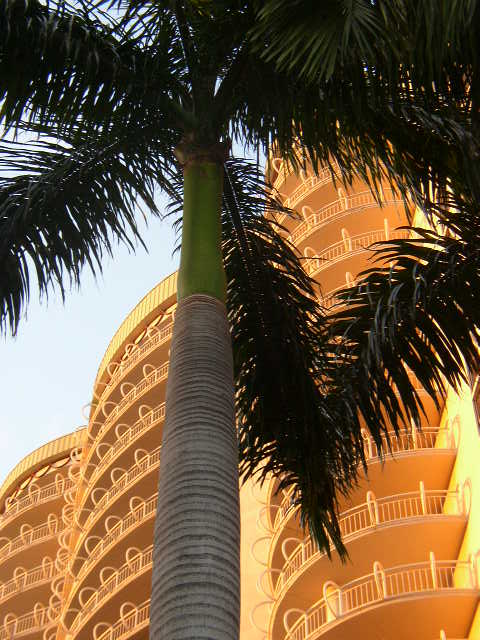
Sunset on the Hotel

P1010113

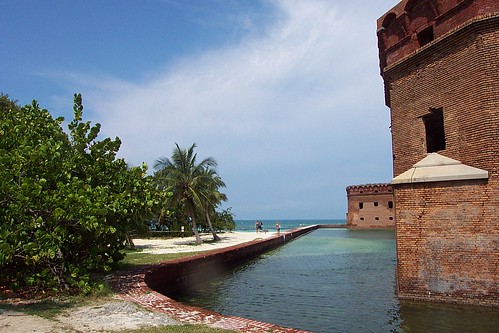
Dry Tortugas National Park. The name "Tortugas" was given by explorer Ponce de Leon in 1513 for the abundance of sea turtles, while "Dry" refers to the absence of available freshwater. A long-time pirate hide-out, the place was chosen by the US Navy as the "Gibraltar of the Gulf", a strategic location to control shipping from the Gulf of Mexico to the Atlantic Ocean. Despite formidable logistical challenges, Fort Jefferson, the largest brick structure in the Western Hemisphere, was built on Garden Key using 6 million hand-made bricks. However, by the time the fort was nearly finished, advances in artillery had rendered it obsolete, so its use was mostly as a civil war prison, holding 2500 prisoners and four men convicted of complicity in the assassination of President Lincoln.

DCP_8693

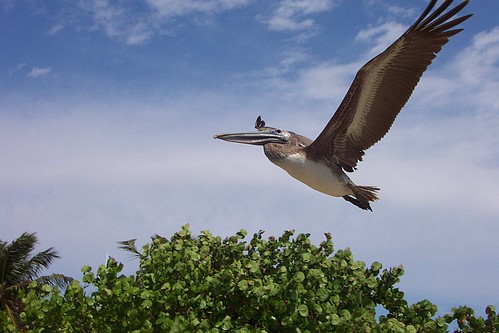
Big Bird.

DCP_8672

DCP_8638


(This article was initially written in March 2004.)

Long Island Excursion


A tranquil afternoon,
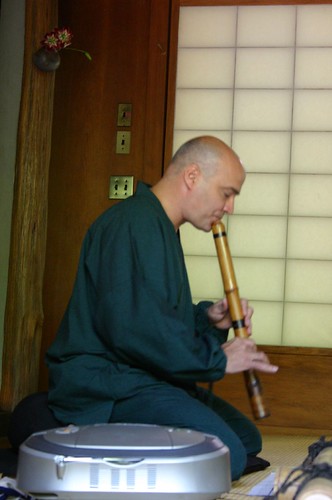
Live painting of the green garden, Shakuhachi, and An inner ME...

Life in the broad New York area is filled with surprise and joy. Many excursions, like pearls, string up my fabulous New York necklace. Thereinto, long island is the most unforgettable. I'd like to share my pearl with you.

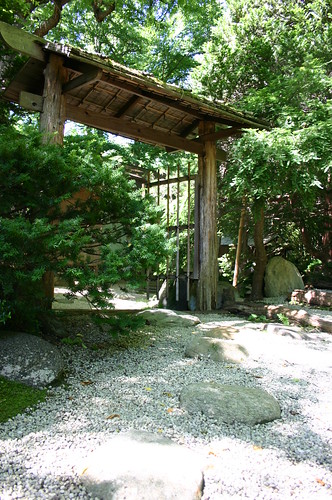
It was a hidden Japanese garden. Getting off the train at Locust Valley after one hour and half from Penn Station, I was almost lost in the neat tiny town. Very few people knew the place. Among those who seemed to get some ideas, each one gave me the different guide. I just couldn't find the garden. She would rather like to play the game of hide-and-seek. Finally, it took me fifty minutes to arrive in the entrance.

Picture 061

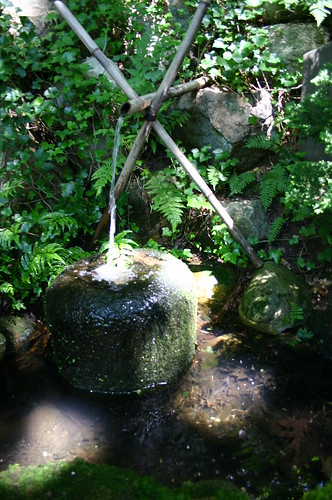
Once you arrived there, all worries and impatience were gone! It immediately evokes the sensation of harmony, the transcendent feeling of a deep, remote mountain hamlet. The garden was very much a spiritual journey and was created in accordance with Zen precepts and aesthetics. In Japanese, the characteristics would be those of yugen (subtle, yet profound), yohaku-no-bi(paucity, a 'less is more' notion where the omitted elements are as important as those included), mitate (seeing anew or given new life or meaning), wabi (subdued), sabi (taste), suki (connoisseur ship). Sorry for so many jargons. But it's all the truth.

Picture 065

Picture 056

Picture 055

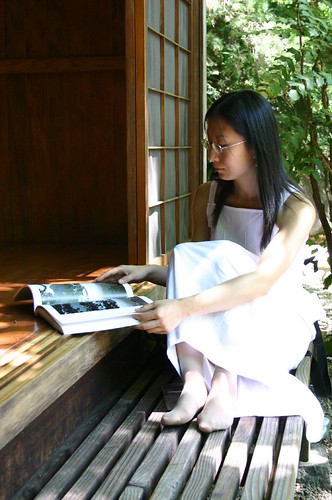
There I heard the shakuhachi (bamboo flute), while strolling along paths in the forest and sitting in the traditional Japanese Teahouse. The picture you saw was taken at the doorsill of Tea House, there I am reading the book of Japanese Garden while enjoying the Shakuhachi. What unique sound! It promotes spiritual growth through meditative breathing. The artist who played Shakuhachi told me:

"... In the asian culture, being strong doesn't mean muscle, but breath. If you feel nervous, you lose already; because you cannot put yourself into the music. Playing Shakuhachi helps your find inner balance and improves your breath..."

Picture 052

Picture 050

For other pictures of New York City, Click this link for a slideshow: New York City.

Photographed by Jennie Bai.

Copyright ©Jennie Bai. All Rights Reserved.

(This article was initially written in the summer of 2005.)


Saturday, July 18, 2009

Xi Tang - A Story of Time


Open a long sealed memory
Exhibit the life space of ancestors
Here you find the alley
Ever romped in childhood
......

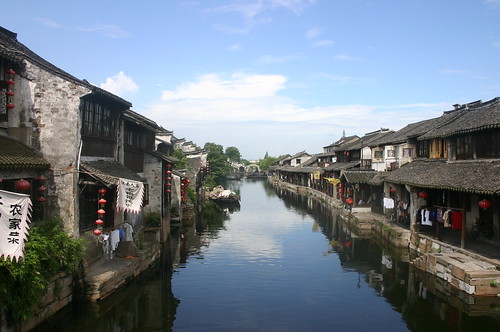
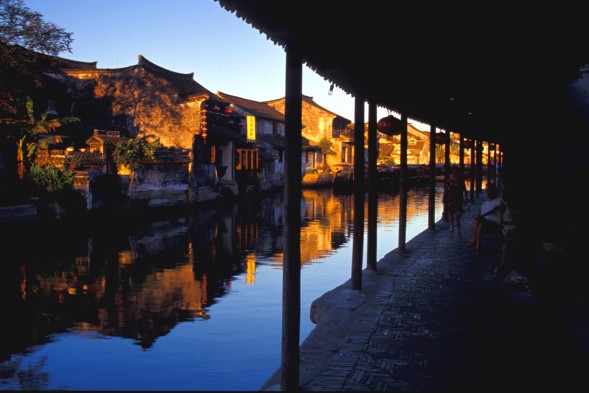
After only one-hour driving, we came to this little water town: Xi Tang. With fashionable images of ShangHai still in mind, we immediately were attracted by this tranquil village. Nine water channels divide the town into eight sections of land, composing a labrinth. Most houses along the river have already been there for several hundred years.

The labyrinth has 140 bridges, a few of the more ornate ones with ramps as well as steps, from centuries when some of the women could only shuffle on feet misshapen from the practice of binding.

This is the major water channel in Xi Tang.

xitang01

Xi tang smiles in the dawn. A quiet, shaded world seemingly left behind the history and time, behind all mundane worries.

xitang02

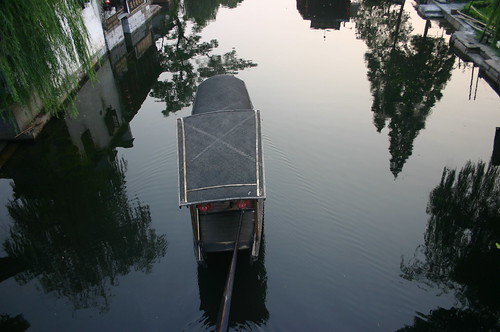
A boat on the water

IMG_2741

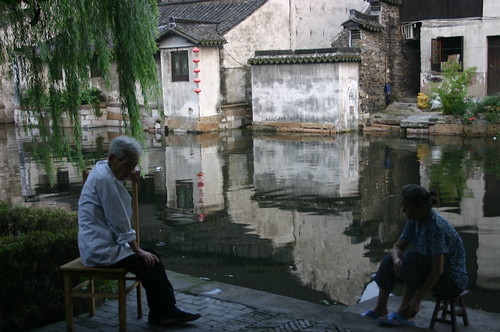
Old grandmas chatting along the river

IMG_2744

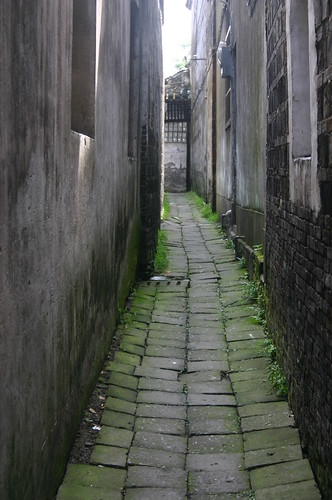
Alley with historical footprints

IMG_2787

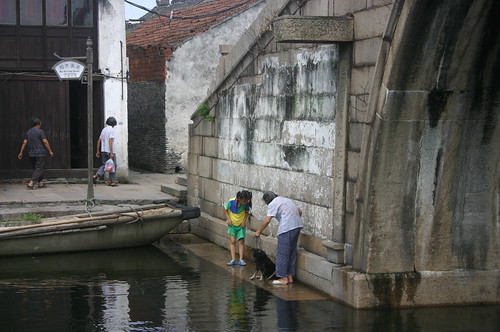
A little girl, her grandmother and a dog

IMG_2788

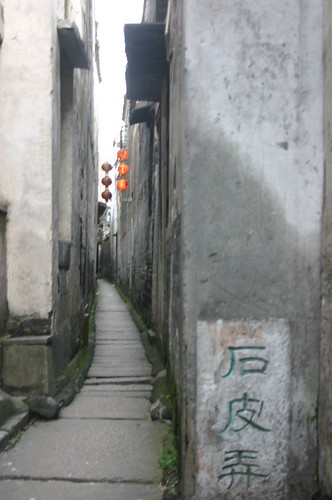
Shi Pi Alley, leading to an oldtime inn

IMG_2737

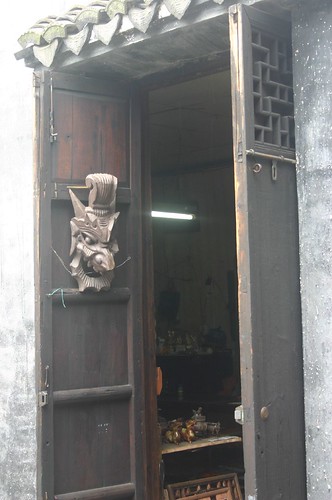
Tranditional mask on a shop's door

IMG_2784

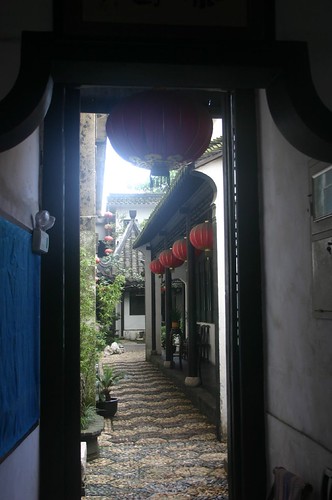
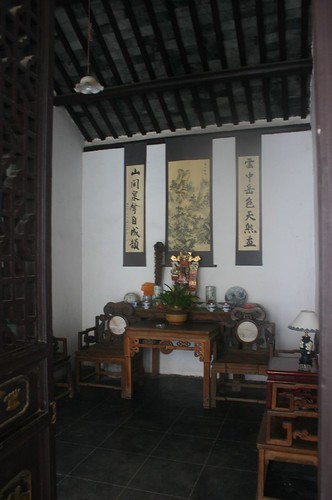
The hallway and sitting-room of Li Yuan Inn, where we spent a beautiful night.

IMG_2781 IMG_2778

Photographed by Jennie Bai.

Copyright ©Jennie Bai. All Rights Reserved.

(This article was initially written in the summer of 2006.)