Saturday, July 17, 2010

One Night in a Border Town


我喜欢旅行。在陌生的地方,以简单纯粹的面目去面对陌生的人,不提过往, 不提职业。无人过问我是谁。我就是我自己。 (I enjoy traveling. In an unknown place I could face unfamiliar persons in a simple and pure way, without referring to my past or career. No one asks who I am. I am only myself.) -- Jennie

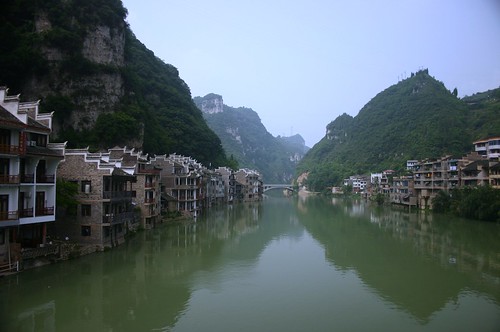
Zhenyuan, an ancient border town of the Miao (ethnic minority) people, has a long history dated back to 202 B.C. when Emperor Liu Bang instituted the town as a county. Its long history endows the town with rich cultural relics including more than 160 scenic spots within 1.2 square miles. Sheltered in mountains and cut through by the Wuyang River, the town is divided into two parts: south 'Wei' and north 'Fu', which forms a water town.

IMG_0393
(View of Zhenyuan from the Black Dragon Cave
青龙洞眺望镇远城)


With their brown mud walls, black tiles and perfect setting, all houses harmonize so completely with the surroundings that your heart leaps up in delight. Any traveller with the least feeling for poetry or painting could drift here without tiring for weeks in a small boat, for there are fresh marvels at every turn produced by man's labour and the bold skill of Nature which hold you utterly spellbound.
IMG_0366
(The town is cut through by Wuyang River)

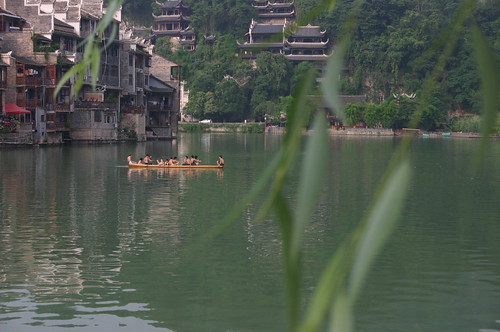
The Dragon Boat Festival, held on May 25th, is the most ceremonious celebration in Zhenyuan. Though we missed the festival, a boat race is re-enacted by two groups of lads on such a quiet Saturday afternoon.
IMG_0417
(Boys playing on a boat)

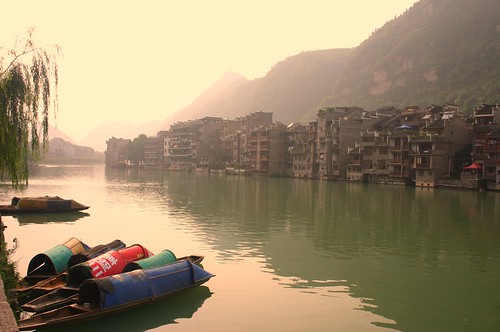
After a few days driving in the remote mountains, I could hardly imagine to see such a familiar scenery in Zhenyuan. All in my eyes conjures up a feeling as if I were in the south of Yangtze River which is about one thousand miles east of Zhenyuan. I cannot help recalling another water town, Xitang which I visited in 2006. For many years I have been intensely attached to various water towns so that I ever thought of myself as a fish in previous incarnation.

IMG_0406


The town in the dusk, tender, lovely and tranquil.
IMG_0410

For all its quiet tranquility, this little town in history is a center of trade and communications for Guizhou and a millitarily important gate to enter Yunnan as well as Laos, Burma, and so on. Therefore the small waterfronts have a character all their own. There are inns where merchants put up, barbers' establishments, not to mention restaurants and general stores.


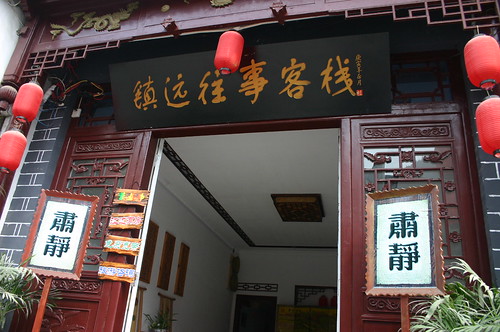
We lodged in a two-floor inn called 'Scenes of the past Zhenyuan'(see below). It's a building with antique facade yet completely modern facilities inside. I chose a room on the second floor with a stone-paved balcony in face of the river. The next morning I ran across an elder couple from Switzerland in the lodging, who by chance saw my room and immediately loved it yet couldn't communicate with the owner. I was glad to do the translation; indeed westerns are almost unknown in this little town and they are the first ones I saw in my one-week journey in Guizhou. Allowing me to do a little advertising here, Zhenyuan is such an excellent place to experience the day-to-day life of southwestern China at close quarters with its friendly people.
IMG_0349
(The inn of "Scenes of the Past Zhenyuan")

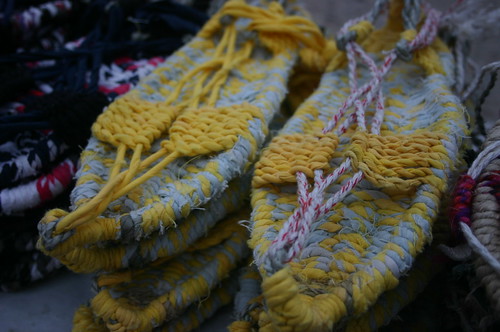
Along the business street, I saw many lovely stuff such as handmade straw sandals, wood-carved buddha statues.
IMG_0445

IMG_0461


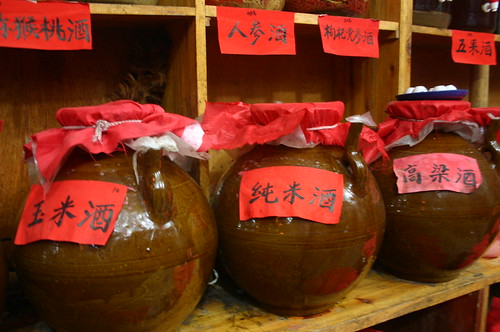
A wine shop. Names of the wine were written on red paper: corn wine, ginseng wine, pure rice wine, kiwi wine, etc.
IMG_0464

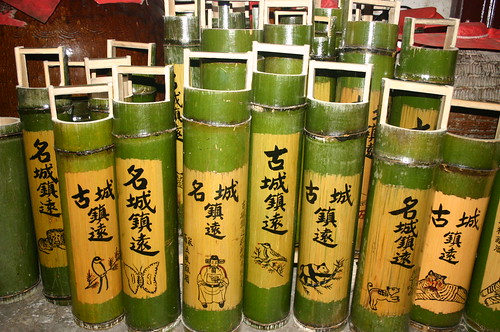
All kinds of wine was further contained in bamboo sections.
IMG_0465


The scene of the long tables in front of the modest eating houses and wines on the top recalled me the novel 'A Border Town' written in 1930's (《边城》, 沈从文). Shen Congwen, the novelist, wrote,
"不拘谁个愿意花点钱,这人就可以傍了门前长案坐下来,抽出一双筷子捏到手上,那边一个眉毛扯得极细脸上擦了白粉的女人就走过来问:“大哥,副爷,要甜酒?要烧酒?”男子火焰高一点的,谐趣的,对内掌柜有点意思的,必故意装成生气似的说:“吃甜酒?又不是小孩子,还问人吃甜酒!”那么,酽烈的烧酒,从大瓮里用木滤子舀出,倒进土碗里,即刻就来到餐桌上了。

"For a few cents anyone can sit down at the long table and pull out a pair of chopsticks. Then a woman with plucked eyebrows and a powdered face will come to ask, "Would you care for sweet wine or rice wine, master?" A spirited man who likes to tease will retort, "Sweet wine? What do you take me for -- a child?" Then rich yellow wine is ladled out of the vat into an earthen bowl and brought promptlyu to the table. This potent, fragrant brew can knock a strong man out if he drinks too much."


IMG_0448
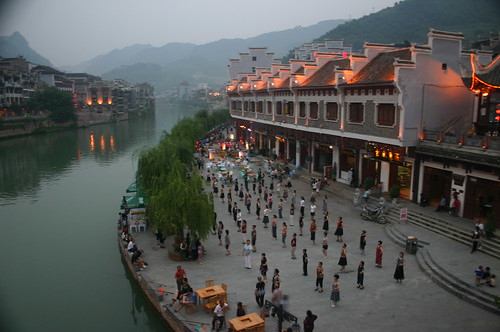
(Women dancing in a plaza)

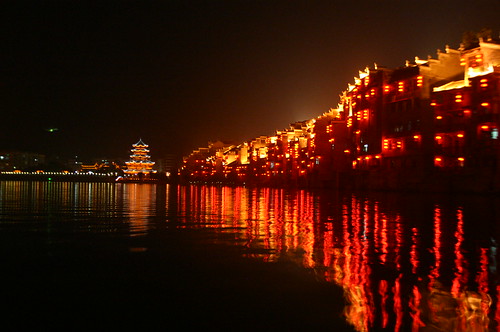
IMG_0479
(The night view, taken from a touring boat)


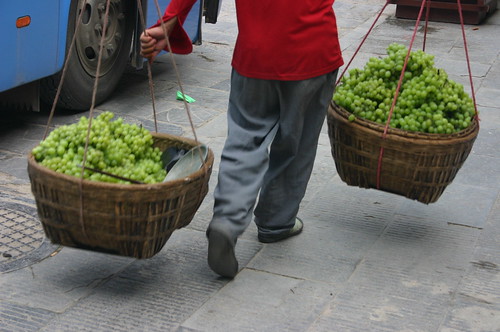
I enjoyed getting up early and strolling on the quiet bluestone alley, when most tourists were still in the dream. It's so tranquil that I could hear the sound of time. Yet I am not as early as those diligent farmers.
IMG_0355
(Fresh grapes)

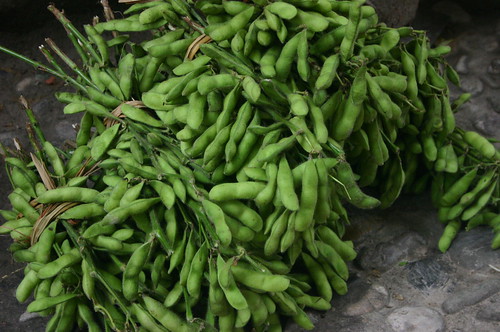
IMG_0502
(Green soy beans directly from the field)
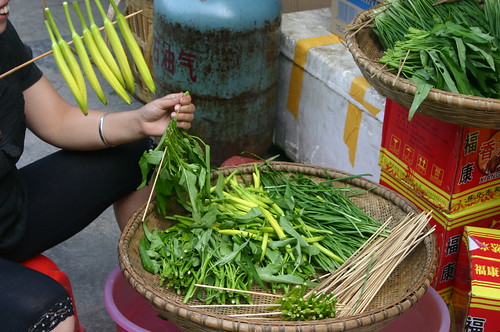
IMG_0357
(A housewife is preparing vegetable)


The trip of Zhenyuan is not complete without cruising in the Wuyang River. We left the town in the morning and drove to the Wuyang scenic area, switching to a boat. It's a 20-mile waterway with secluded caves, gurgling springs, rugged rocks, and spectacular waterfalls interspersed on the mountains.
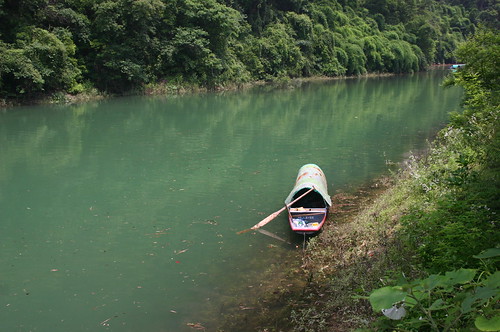
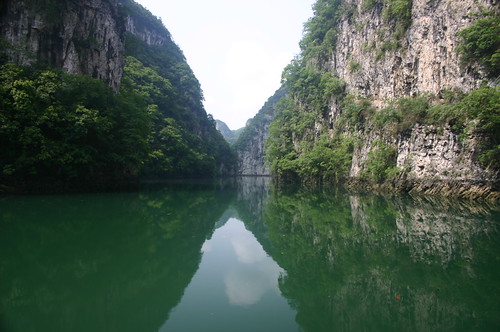
IMG_0320

IMG_0259

IMG_0301


Writing this travelogue, I seem to relive the journey, refreshing and cool. I wish my words and photos could also bring you freshness in this hot summer.
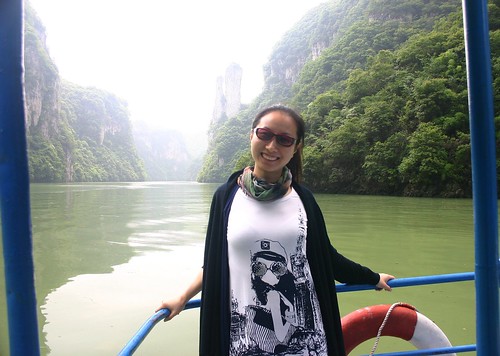
IMG_0311

一笑一尘缘


Photographed by Jennie Bai.

Copyright ©Jennie Bai. All Rights Reserved.

LANG-DE Miao Village


生命中有许多吉光片羽,无从名之,难以归类,也不能构成什么重要意义,但它们就是在我心中萦绕不去。这些东西在那里太久了,变成像是我欠的,必须偿还,于是我只有把它们拍出来。我称它们是“最好的时光”。 ——侯孝贤


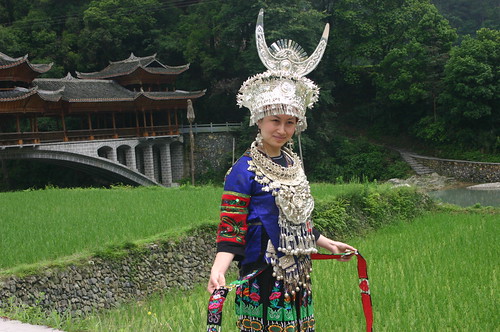
When I first saw the Miao festive clothes in the Shanghai Museum twelve years ago, I was stunned by its beauty and vowed to have my own collection one day. The dream came into being in Guizhou, the land of the Miao people.

IMG_0703


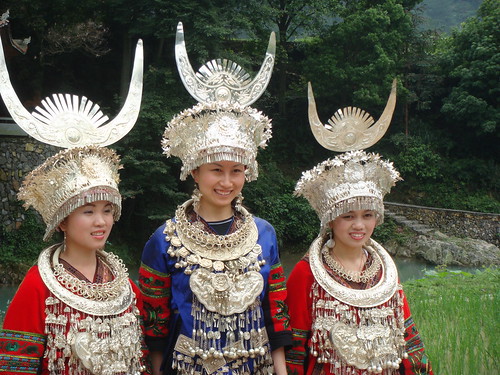
Miao is one of 56 ethnic minorities in China, with its own language and unique culture and is best known for their exquisite clothes worn in festivals and wedding. Miao festive clothes are appealing not only because of their unique styles and craftsmanship, also because they reveal the rich Miao culture and its long history. A complete set of the Miao dress includes embroidered clothes which takes a Miao woman 1-2 year to complete and silver ornaments which weights more than 20 pounds. Silver is believed by Miao people to be the symbol of light which can dispel evil spirits.

IMG_0563

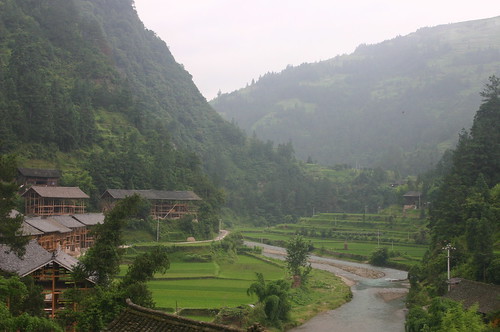
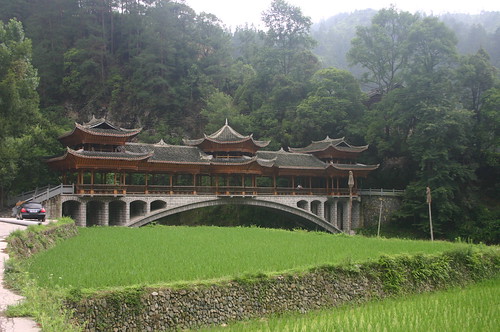
Mountains and rivers make Miao areas difficult to access, which has lessened the impact of modern civilization and helped them to maintain old traditions. The above bridge is often seen at the entrance of any Miao village, called "the wind and rain bridge."

DSC03646


Walking through the bridge, let's visit the miao village LANG-DE where lives almost 500 Miao people.

IMG_0606


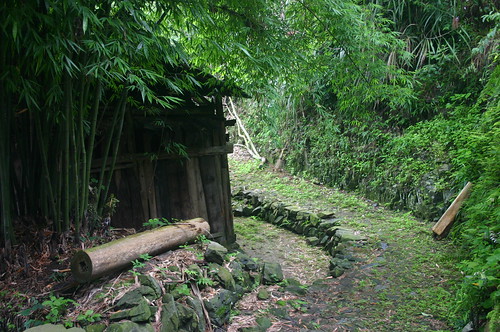
A winding path leads to the serene village.

IMG_0613


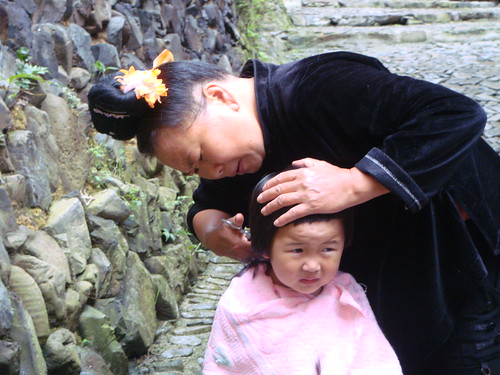
In the village we ran across a grandmother cutting hair for a little girl.

DSC03612

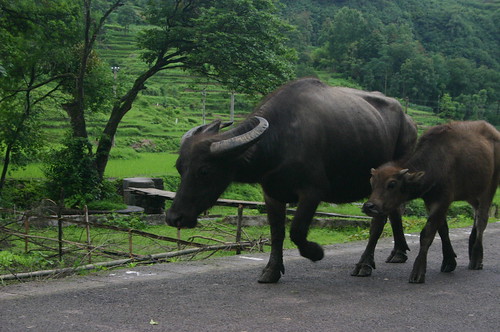
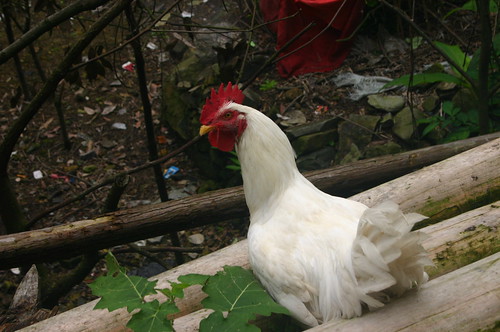
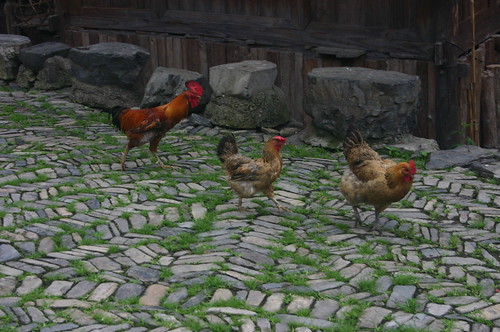
Animals in the village.

IMG_0166

IMG_0602

IMG_0585


IMG_0174


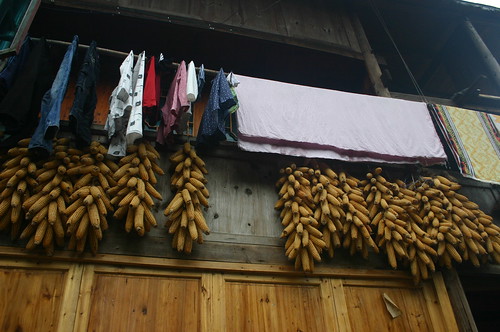
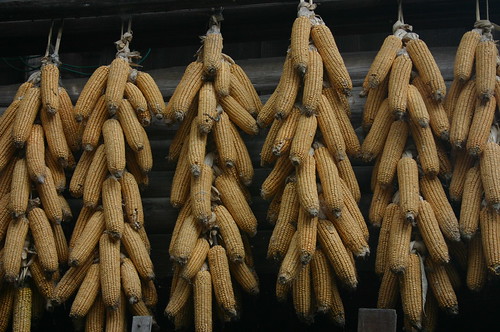
Almost every house hangs dried corns under the roof.

IMG_0579

IMG_0572

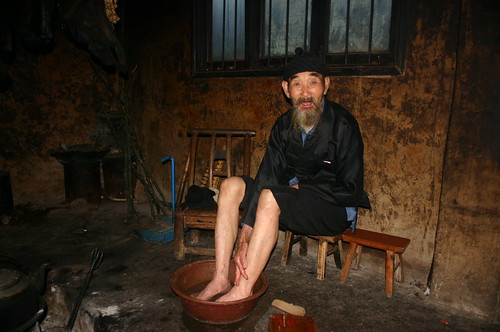
A venerable elder man who is a little more than 90 years old.

IMG_0234


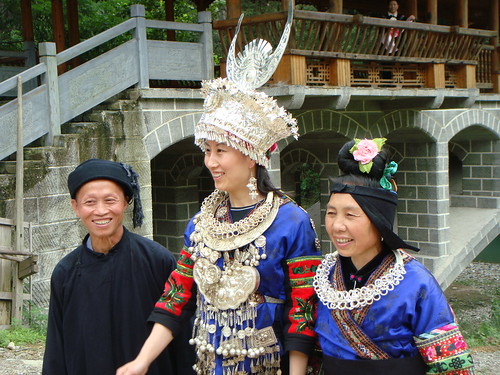
The climax of this trip is that we bumped into a newly-married couple returning to the home of the bride's parents. This is a folk custom in most area of China. The bridegroom is from Zhejiang Province, one thousand miles northeast of Guizhou whereas the bride is originally from the LANG-DE village. It's a marriage of a Miao girl and a Han boy.

Since it's the first time for the couple to return to the village after marriage, the bridegroom, the bride, her sister and parents are all dressed in the Miao festive clothes. Blazing with colors and silver ornaments, they are taking photos to record the happy moments. How lucky we are to share their happiness!


DSC01235
(With the bride (right) and her sister)

DSC03675
(With the bride's parents)

DSC03702
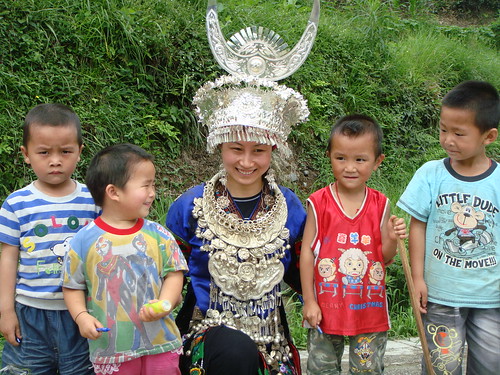
(With the Miao kids in the village)


Peace reigns supreme and the village folks spend all their days in an unspoiled solitude hard to imagine. Tranquility makes them reflect more deeply on life, makes them dream more. Naturally every soul in this little village in his allotted span of days has his private hopes and is torn by love and hate. Exactly what fills their minds? It is hard to say.

IMG_0129

IMG_0132


Photographed by Jennie Bai.

Copyright ©Jennie Bai. All Rights Reserved.
Friday, July 16, 2010

On the road


Jiri_Bouda
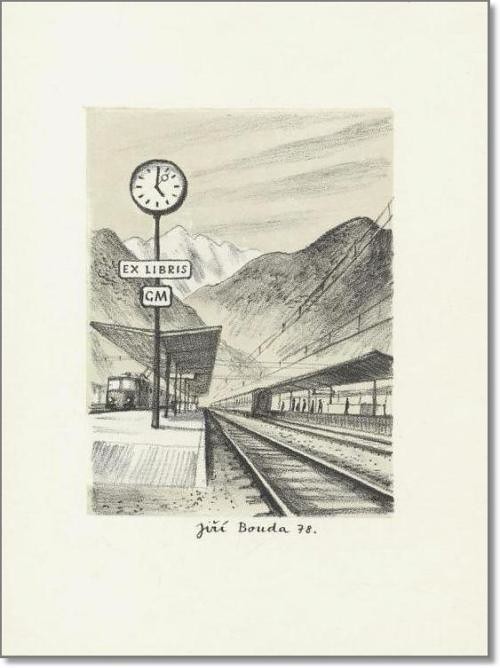
(Stoneplate print by Jiri Bouda)

Saying goodbye to my dear parents, I flew to Beijing in the morning of July 9th, planning to pick up my passport/visa from the U.S. embassy and to take an afternoon flight back to New York. With a great surprise, I didn't get my visa on time, which happened for the first time in the past eight years. The reason they offered was simply that the handling process is delayed due to large applications in summer, though they said I should get it the next Monday or Tuesday.

Stranded! Yet I have no time to complain. What to do next? Is there still a seat available to NYC next Tuesday in such a busy traveling season? Should I stay in a hotel in Beijing for another four days, or fly back to my hometown? Who should I notify immediately for my delayed returning? How about those meetings scheduled the next Monday and Tuesday? Too many questions crowded my mind in seconds!

All problems are gone when I'm now typing these words in Mac. Not to mention those inconvenience and additional cost in money and time, I booked the last available seat for Tuesday's flight, I detoured my way home by visiting Yungang Buddhist grottoes which were built in the 5th centrury, I even watched the semi-final and the final of World Cup at home. ... My mother was extremely happy seeing my extended stay, even happier than the first day I went back. Unexpected pleasant surprise, isn't it?

Look, this is the magic of a journey. No matter how you plan it, there always exists unexpected meetup, unpredictable risk as well as disappointment and joy it brings. It could be a romance in 'Before Sunrise', an awkwardness in 'Midnight Run,' could even be a fatal death in 'Into the Wild.' Whatever it is, the journey remained in the memory may not be those planned beauty, but rather questions, worries, conflicts, and the courage and resolve to face all the uncertainty.


Turn round, and go home.

The meaning of a journey might never be traveling itself. All the effort to pulling through mountains and rivers could be enriched to a receding figure: going home from anywhere in the world.


转身,回家。   

原来,旅行的意义从不在旅途本身。
千山万水,
都只为了转身回程的那一个背影,
只为了让我们从他乡终于奔赴故乡。
-- 艾小柯